| |
| Monday, 19 October 2026 |
| The Life & Work of William Moorcroft |
| James Smallwood |
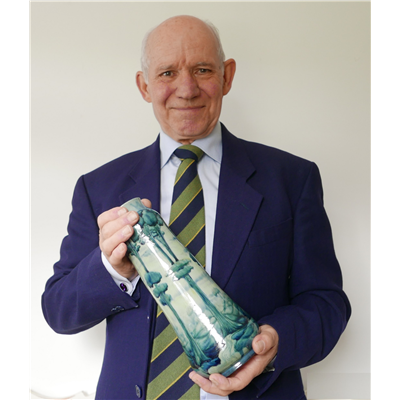 |
William Moorcroft 1872 – 1945 was brought up in the back streets of Burslem, Stoke-on-Trent. He knew tragedy from an early age losing his sister when he was 8, his mother a year later and his father when he was just 12. Perhaps it was this tragic upbringing that helped develop his strength of character and resilience that saw him establish himself as the most accomplished studio potter of recent times. William trained at what was to become the Royal College of Art and could have pursued a career as an art teacher but instead chose to employ his artistic talents in the medium of pottery. He stuck faithfully to the principles of the great William Morris who stated that “nothing was worth producing if it hadn’t come from the artist’s own hands”. Whilst not unique, his skill in producing tube-lined pieces with designs inspired by nature are at the very pinnacle of the potter’s art. International gold medal awards, a supplier to renowned retailers Liberty and Tiffany, a successful global export business and a Royal Appointment to Her Majesty Queen Mary in 1928 are just some of his many achievements. James Smallwood has an established and successful lecturing career speaking to gardening and horticultural groups and at Royal Horticultural Society shows and events on a number of gardening topics. He has been a keen collector of Moorcroft pottery, primarily his early work,for over 30 years and has an extensive collection. He is a member of the Moorcroft Collectors’ Club and has visited the pottery on a number of occasions to develop an in-depth knowledge of past and present processes of manufacture. He is in regular contact with Moorcroft and has generously been given access to their archive material. Whenever possible he takes a selection of Moorcroft pieces to display. |
|
| Monday, 16 November 2026 |
| A Decorative Art: History of Wallpapers |
| Jo Banham |
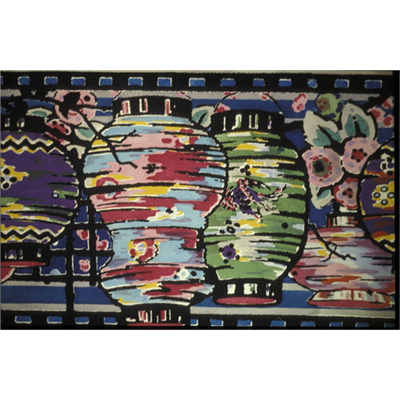 |
Wallpaper is often regarded as the Cinderella of the Decorative Arts – the most ephemeral and least precious of the decorations produced for the home. Yet the history of wallpaper is a long and fascinating subject that dates back to the 16th century and encompasses a huge range of beautiful patterns created both by anonymous hands and by some of the best-known designers of the 19th and 20th centuries. This lecture explores the history and development of this product from earliest times up to the present day. It includes a discussion of the changing ways in which wallpaper was made and a survey of designs from the first black and white patterns, the creation of elegant flock hangings, the fashion for Chinese hand-painted papers, the introduction of machine-printing, the designs of Morris and the Arts and Crafts Movement, and the taste for Modernist and Contemporary designs in the 20th century. It also includes a discussion of the ways that wallpapers were used within grand and more ordinary homes and hopes to justify the claim that they were indeed a truly Decorative Art. Jo Banham is a freelance curator, lecturer and writer. From 2006-2016 she was Head of Adult Learning at the Victoria & Albert Museum, and before that Head of Learning and Access at the National Portrait Gallery, and Head of Public Programmes at Tate Britain. She has also been Curator of Leighton House and Assistant Keeper at the Whitworth Art Gallery. She has published on many aspects of Victorian and early 20th century decoration and interiors. She recently curated an exhibition on William Morris and the Arts and Crafts Movement for the Juan March Fundacion in Madrid and the Museu Nacional d’Art Catalunya in Barcelona and she is currently writing a book on the History of Wallpaper. She is also Director of the Victorian Society Summer School. |
|
| Monday, 18 January 2027 |
| Along the River Tiber - 28 centuries of history told through the bridges and riverside monuments of Rome |
| Stuart Harvey |
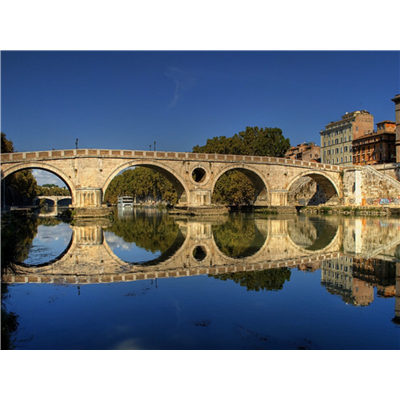 |
Join professional Rome tourist guide, Stuart Harvey, for a journey upstream along the River Tiber as it winds through Rome from the Tiber Island to Ponte Milvio just north of the city centre. Starting with the legend of Romulus and Remus and the founding of Rome, and leading us through to the Unification of Italy and Rome’s new role as a modern capital city, the Tiber will lead us through 28 centuries of Roman history told by the historic bridges and riverside monuments. Roman Emperors, Renaissance Popes, Kings of Italy and some of the important and controversial political figures of the 19th and 20th centuries will feature along the way as we enjoy the beautiful views of "Er Biondo Tevere" ... "The Blond Tiber", as it is known in Rome. Stuart is a “History and Art Communicator” of 30 years experience. He is a London Blue Badge Tourist Guide (qualified in 1998 and awarded “New Guide of the Year”) and also a Guida Turistica Abilitata della Provincia di Roma (qualified in 2010). He has worked in educational tourism since 1992, leading study tours all over Europe. Living in Rome since 2003, Stuart has developed a great love for the Eternal City and its many treasures. In addition to his primary career as full-time Rome tourist guide, Stuart’s entertaining and lively lectures and virtual tours bring the rich artistic and historical wealth of Rome’s 28 centuries to life for people all over the world. *This lecture will be via Zoom with Stuart speaking to us from Rome - you can enjoy the lecture from the comfort of your own home or in the hall with others. |
|
| Monday, 15 February 2027 |
| Edward Burra |
| Rosalind Whyte |
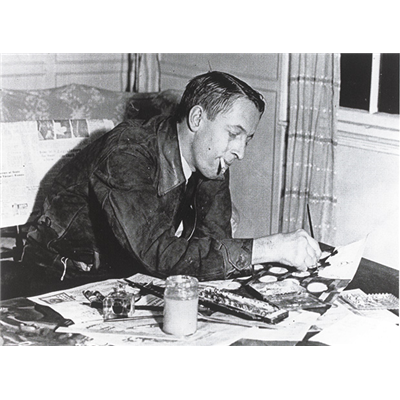 |
From safe, traditional, beginnings in East Sussex, Edward Burra's life and art sallied forth, encountering Parisian nightlife, the jazz clubs of prohibition-era New York and the war-torn landscapes of the Spanish Civil. His paintings have been described as ‘vividly idiosyncratic and memorable’ and became increasingly disturbing and surreal. This lecture looks at the life and work of this highly unusual British artist and the reasons his art took the form it did. Having qualified with a BA and MA from Goldsmith’s College and an MA (distinction) from Birkbeck College, Rosalind Whyte is now an experienced guide at Tate Britain, Tate Modern, the Royal Academy and Greenwich. She also lectures at the Tate, to independent art societies and on cruises. *This lecture will be via Zoom - you can enjoy the lecture from the comfort of your own home or in the hall with others. |
|
| Monday, 15 March 2027 |
| Meet the Glasgow Girls |
| Julia Marwood |
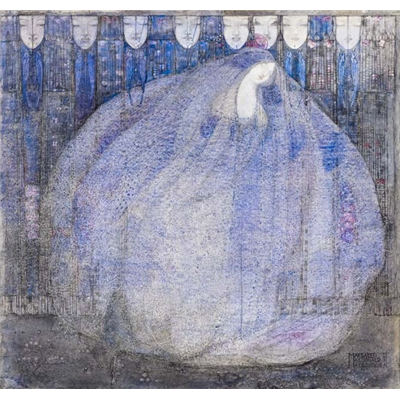 |
For much of the nineteenth century, Scottish art had a very particular character - certainly good, but rather conservative and perhaps a little dull. The Glasgow Boys emerged on the scene in the early 1880s, excited by new developments on the Continent, and fighting their way to the notice of the British art world. But there were Glasgow Girls too, a little later, women who made their mark in many branches of art and design, helped by the advent of a new forward-looking regime at the Glasgow School of Art. This lecture will tell the story of the Glasgow Girls and introduce many of the most important characters, including textile artists Jessie Newbery and Ann Macbeth, illustrator Jessie M King, fine artists Stansmore Dean, Bessie MacNicol and Norah Neilson Gray, and the sets of talented sisters working together in the field of design and applied art - the Waltons, the Gilmours and, of course, the remarkable Macdonalds - Frances and Margaret, the latter known for so much of the twentieth century as just Mrs Mackintosh. Now their outstanding achievements are being increasingly researched and celebrated, as they so rightly deserve. Julia has loved looking at art since discovering the work of Gustav Klimt while teaching English in Austria as part of her German degree course at the University of Durham. She spent the first part of her career teaching German, then did a Master’s in Teaching English at the University of Manchester, and went on to teach international students in the city. She became a tour guide at Manchester Art Gallery in 2015 and after leaving language teaching in 2018 she has loved spending all her time sharing her passion for art as a speaker to many different groups - apart from when she is wild swimming or learning Scottish Gaelic! She became an Accredited Lecturer of The Arts Society in 2020, specialising in Scottish art from 1880 and the art of Manchester. She and her astronomer husband love to travel around Europe and take every opportunity to visit art galleries wherever they go, but Scotland has always been their favourite destination! |
|
| Monday, 19 April 2027 |
| Persepolis: art, architecture and ideology of the Persian Empire
|
| James Renshaw |
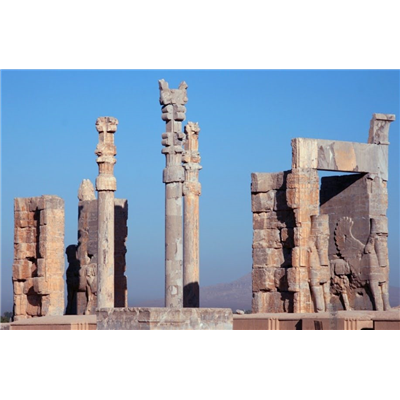 |
The Persian empire exploded into life during the middle of the 6th century BC and was the largest empire in the world for the next two centuries. It stretched from the Mediterranean in the west to the Indus valley in the east, from the Eurasian steppes in the north to Egypt and Arabia in the south. In around 515, its third Great King, Darius I, commissioned the building of a new city, Persepolis, with his palace at its centre. We know a great deal about this palace, and one of its central features, the Apadana Staircase, can be seen in replica in the British Museum. What can this palace and its art tell us about the ideology of this extraordinary and influential empire? Following a degree in Classics from Oxford University, James has taught Classics at secondary school level, most recently at the Godolphin and Latymer in London where he has run the school’s Ancient World Breakfast Club, which has an ethos similar to that of The Arts Society. Since 1998, James has written a number of textbooks related to the classical world, including In Search of the Greeks and In Search of the Romans. In addition to his school teaching, he has lectured for the V&A Academy and been a Council Member for the Hellenic Society and the Roman Society as well as being a keen traveller. James is currently working on a book The Marathon: an Epic History charting how stories from the battle of Marathon in 490 BC led to a new 'marathon' event at the first modern Olympics in 1896, and how this event has gone on to become a sporting craze. |
|
| Monday, 17 May 2027 |
| Joseph Duveen: charismatic crook or the world's greatest art dealer? |
| Mark Meredith |
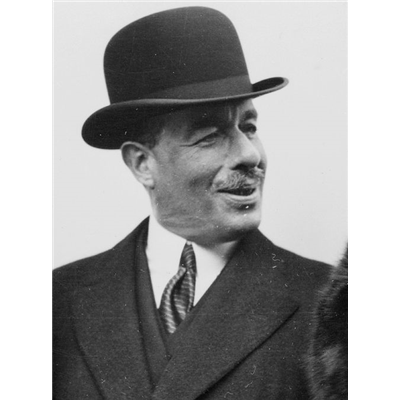 |
Europe has a great deal of art, and America has a great deal of money,” remarked Joseph Duveen. It was a simple enough observation, but there was only one man who was perfectly positioned to combine his quintessential English charm with an unparalleled gift for creative salesmanship, allowing him to convince the tight-fisted titans of Wall Street (Frick, Morgan, Mellon etc.) that there was indeed one thing more important than money - art - and, “when you pay high for the priceless, you’re getting it cheap”. Without Duveen, two of America's three most highly rated museums - the Met in New York and the National Gallery in DC - would struggle, perhaps even fail, to be considered world-class today. But was he just a charismatic crook milking millionaires, or was he indeed truly deserving of the title, ‘world’s greatest art dealer'? Mark Meredith's area of special interest is America - its great collectors/collections, its social history, and its architecture.He is a regular speaker in Europe and the USA and a founder of “AmericanAristocracy.com”. Rather than just talk at an audience, Mark likes to tell a story with richly illustrated lectures laced with humour, with the aim of leaving his listeners buzzing with thought and opinion. |
|
| Monday, 21 June 2027 |
| Hot Stuff! The birth of studio glass |
| Mark Hill |
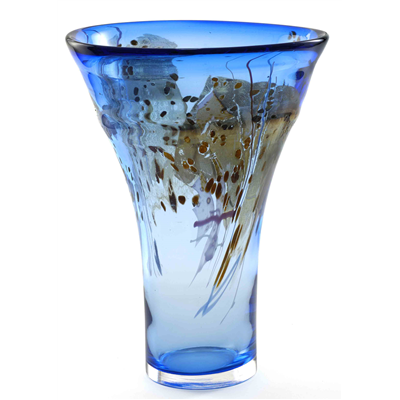 |
Although glass has been made for centuries, the 1960s saw a revolution in the way it was made, opening it up to artists across the world and allowing glass to be used as a medium for art. After looking at the historical context and the genesis of the movement, I examine the work of six key glass artists from the US and the UK, including Dale Chihuly, Sam Herman, and Peter Layton. Containing previously unseen photographs taken at the time, this talk also includes my top tips and an overview of the market today and the creative journey made by studio glassmakers so far. Mark Hill studied History of Art & Architecture and began his career as a porter and Junior Cataloguer at Bonhams, before moving to Sotheby's where he was a Specialist in the Collectors' Department. Mark then became a director of an internet company forming and running a ground-breaking deal with eBay Live Auctions. In 2005 he founded his own publishing company in 2005 and has published over 15 books on emerging specialist subjects in the decorative arts. A 'Miscellaneous Expert' on the BBC 'Antiques Roadshow' since 2007 and an expert on the BBC's 'Antiques Road Trip', Mark has also co-presented five primetime TV series on antiques and collecting for BBC2. A member of the British Antiques Dealers' Association (BADA.org). . |
|
| Monday, 19 July 2027 |
| How to understand contemporary art |
| Joshua White |
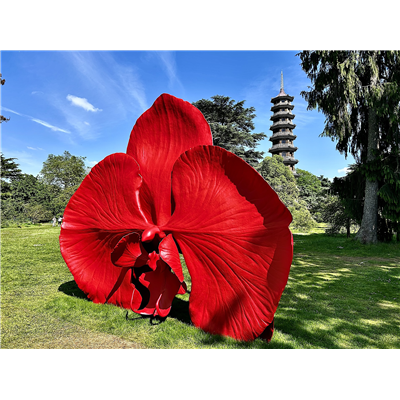 |
Why is contemporary art so intimidating and baffling to many art lovers? This lecture explains the motives, techniques and ideas that create contemporary art. Since the 1960s, artists have embraced a very diverse range of media and exhibition spaces to challenge the long history of western art's conventions. This leaves many people frustrated and often confused. Despite intensive efforts by public galleries such as Tate Modern and other museums to interpret artworks made in the past sixty years, many artists and their artworks remain very challenging and difficult to understand. In this talk, Joshua explains why the visual culture of our own age is so significant and interesting. Ranging from performance of the artist's body to overtly simple artworks made without apparent skill or even hand production, you will learn why appearances can be deceiving. This is a lecture designed to stimulate debate but with the serious purpose of providing ways to appreciate the genuine value of art which is experimental and often provocative. From a pile of bricks to stacks of found rubbish to a blank sheet of paper, he will aim to persuade the audience that art which might be initially infuriating has the capacity to be moving, profound and even 'beautiful'. Joshua White is an enthusiastic and experienced art historian and lecturer who thoroughly enjoys sharing his love and knowledge of art, photography and visual culture with an audience. He is an experienced lecturer in 19th and 20th century European and American art, international contemporary art, photography, design and architecture. He has taught and run courses over a number of years at Christie’s Education and other institutions as well as working as a BBC journalist, presenter for other channels and writing a number of books. He is a founder and presenter of The Art Channel, an online project documenting and interpreting art exhibitions and artworks in museums and commercial galleries which now has received two million views. |
|